
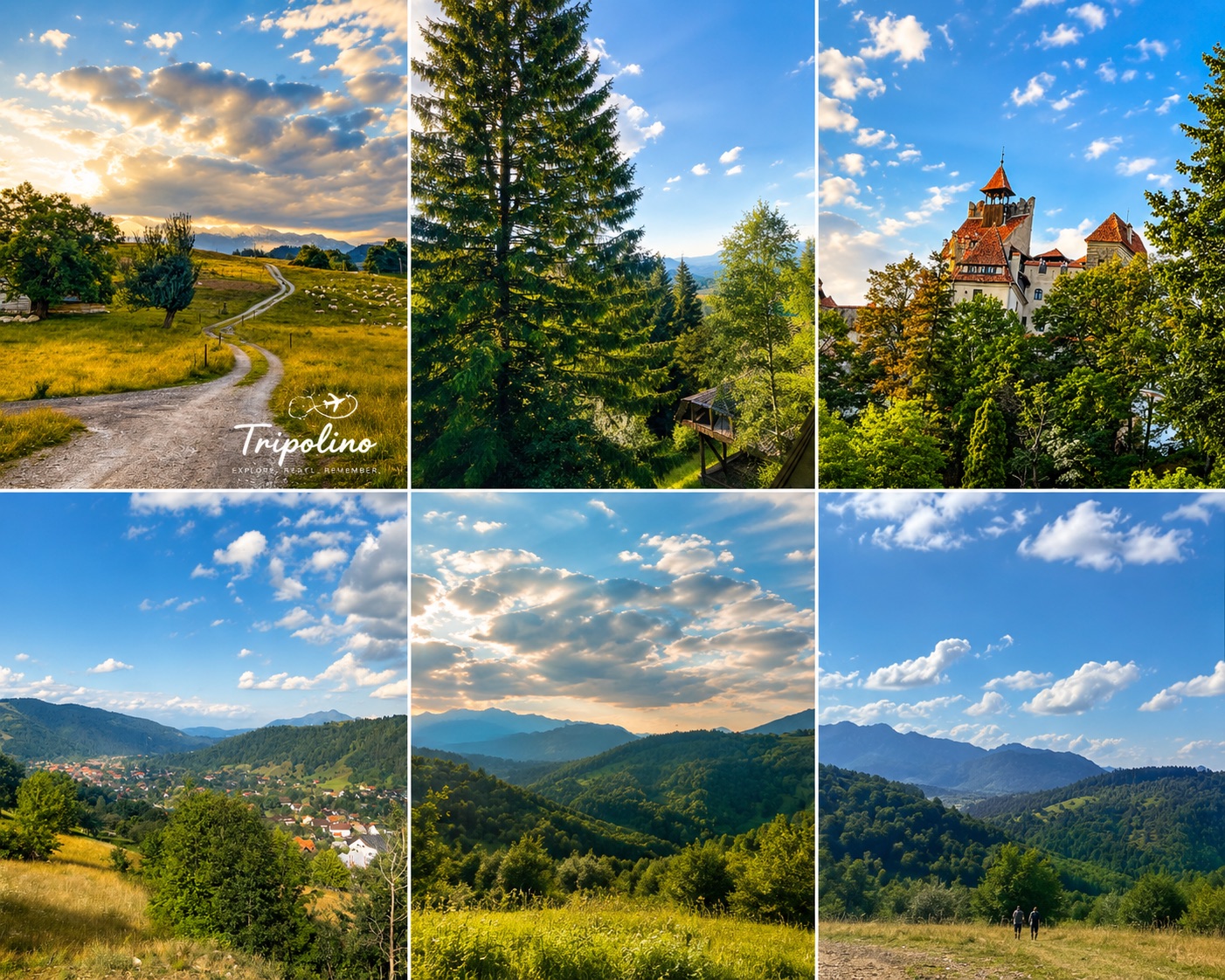
Romania is a rewarding destination for historic cities, castles, mountains, traditional villages, memorable food, and relatively affordable travel. The country is varied, distances can be deceptive, and a little planning makes the experience much smoother.
When to go
Best time to visit Romania
May–June
Mild weather, green landscapes, flowers, and excellent conditions for sightseeing and hiking.
September–October
Probably the best overall choice: comfortable temperatures, beautiful autumn colors, fewer crowds, and excellent conditions for exploring Transylvania.
July–August
The warmest period. Great for the mountains, Transylvania, and the Black Sea, but busier and sometimes hot in cities.
November–March
Best for winter experiences, skiing, and Christmas markets, but colder and with shorter daylight hours.
April
Pleasant in many places, although the weather can be unpredictable. Pack layers and allow some flexibility.
On the road
Driving in Romania
Driving is a great way to explore Romania, especially for families who want to visit castles, mountain areas, villages, and places outside the major cities.
What to know before driving
- Drive on the right-hand side.
- For a standard passenger car, general limits are 50 km/h in towns, 90 km/h on other roads outside towns, 100 km/h on European national roads (E), 120 km/h on expressways, and 130 km/h on motorways, unless road signs set another limit.
- Seat belts and appropriate child restraints are mandatory.
- Romania applies a 0.0 alcohol limit for drivers. Do not drink and drive.
- Motorways are generally good, while some rural roads can be narrow or in poorer condition.
- Mountain roads can be spectacular but slow, particularly during busy periods or bad weather.
Motorway vignette
Cars using Romania’s national road network generally need a rovinieta. It is separate from tolls charged for certain bridges. Buy it through an official or authorized channel and check the registration details carefully.
Mountain driving
Allow extra time in the Carpathians. The Transfăgărășan and Transalpina are spectacular, but high sections are seasonal and can close because of weather or road conditions.
Parking
Parking varies between cities. Historic centers can have limited spaces, paid zones, or restricted access. In Brașov or Sibiu, choose accommodation with parking or check arrangements before arriving.
What tourists should watch for
You may encounter pedestrians crossing unexpectedly, cyclists, slow-moving vehicles, horse-drawn carts, farm animals, impatient drivers, potholes, and sudden changes in road conditions. Drive defensively, especially on rural and mountain roads.
Best advice: rent a car for exploring Romania—not necessarily for staying in Bucharest.
Money
Romania currency guide
Romania uses the Romanian leu (RON). The plural is lei, and prices are usually shown as lei or RON.
Cards or cash?
- Cards
- Widely accepted in Bucharest, major cities, hotels, supermarkets, and most restaurants.
- Cash
- Still useful for small cafés, markets, rural areas, parking, tips, and smaller family-run businesses.
- Best approach
- Carry a modest amount of lei while using your card for most larger purchases.
Can I use euros?
Some tourist businesses may accept euros, but do not rely on it. Paying in RON is normally the better option. If you bring euros, exchange only what you need and compare rates and fees first.
ATMs
ATMs are widely available in cities and tourist destinations. If an ATM offers to convert the transaction into your home currency, it is usually better to choose RON/local currency and let your bank or card provider handle the conversion. Check your own provider’s charges.
Tipping
Family travel
Romania for families with kids
Romania is a great family destination, particularly for families who enjoy castles, nature, animals, interactive museums, and outdoor adventures. It can also offer good value compared with many Western European destinations.
Why families like Romania
- Castles & legends: explore Bran and Peleș and hear stories about medieval Romania and Dracula.
- Nature & wildlife: discover hiking, waterfalls, caves, and wildlife experiences in the Carpathians.
- Fun cities: Bucharest, Brașov, and Sibiu have parks, museums, cafés, and family-friendly attractions.
- Good value: families can often find well-priced accommodation and meals.
- Short adventures: combine cities, castles, and nature without covering huge distances every day.
Best places for families
Brașov
One of the best family bases: a walkable historic center with castles and mountain attractions nearby.
Sibiu
A charming, relaxed city with colorful buildings, pedestrian streets, and family-friendly attractions.
Bucharest
Good for a couple of days, with large parks, museums, and entertainment options.
Sighișoara
A compact medieval town that feels like a storybook, particularly enjoyable with older children.
Sinaia
An excellent stop for Peleș Castle and mountain scenery.
Râșnov
A good family stop, especially for Dino Parc, an outdoor dinosaur-themed park.
With younger children
Do not pack too much into each day. Historic centers are pleasant to explore, but strollers can be inconvenient on cobblestones and uneven streets.
A good rhythm:
One attraction → lunch → playground or park → relaxed afternoon
With older kids & teenagers
Food for children
Romanian cuisine has plenty of approachable options. Children may enjoy mici, grilled meats, pizza, pasta, soups, pancakes, and papanași. Many restaurants are relaxed about families.
A balanced 7–10 day trip
Bucharest → Sinaia → Brașov → Bran/Râșnov → Sighișoara → Sibiu
This combines city time, castles, medieval towns, mountains, and child-friendly attractions without making the entire holiday about sightseeing.
Family tip: Romania is best enjoyed at a slower pace. Leave room for parks, cafés, ice cream, and spontaneous discoveries—especially with younger children.
Culture
Romanian traditions & culture
Romania has a rich cultural heritage shaped by Orthodox Christianity, rural traditions, folk music, crafts, and centuries of regional influences. Many traditions remain visible today, especially in villages and around major holidays.
Christmas
Children and groups of young people traditionally go caroling (colindat), visiting homes and singing traditional songs. Some regions add colorful costumes, masks, and performances. Cozonac, a sweet braided bread often filled with walnuts or cocoa, is a classic treat.
Easter
Romanian Orthodox Easter centers on church services, family meals, and decorated eggs. Încondeierea ouălor—the art of decorating eggs with intricate traditional patterns—is especially famous in Bucovina.
Mărțișor — 1 March
People give small decorative charms attached to a red-and-white thread, traditionally associated with spring, health, and good luck. Early March is a charming time to see Mărțișor stalls in Romanian cities.
Traditional clothing
Folk costumes vary significantly by region and often feature embroidered blouses, woven fabrics, belts, and decorated skirts or trousers. Maramureș, Bucovina, and Transylvania are particularly known for preserving traditional crafts and clothing.
Folk dancing & music
Traditional dancing remains important at village celebrations and festivals. The hora is one of the best-known dances: participants join hands and dance together in a circle.
Folklore
Romanian folklore is full of beliefs about luck, protection, nature, spirits, and mythical creatures. Dracula may be the best-known story abroad, but the country’s folklore is much broader than vampires.
Village traditions
In rural areas, particularly Maramureș and Bucovina, visitors may encounter wood carving, weaving, embroidery, pottery, homemade bread and preserves, traditional farming, and village festivals.
Religious traditions
Romanian Orthodox Christianity has an important cultural role. Churches and monasteries can be central to village life, particularly at Christmas and Easter. Modest clothing and respectful behavior are appreciated at religious sites.
Food & hospitality
Hospitality often revolves around food. Traditional dishes to try include sarmale, mămăligă, cozonac, ciorbă, mici, and papanași. If invited into a home, do not be surprised to be offered food, coffee, or țuică, a traditional fruit brandy.
Travel tip: look beyond formal attractions. Local festivals, village museums, craft workshops, and seasonal celebrations are often where traditions feel most authentic.
Essential advice
Things to know before you visit
Romania is a full Schengen member
Air and sea border checks were lifted on 31 March 2024, followed by internal land-border checks on 1 January 2025. For travelers subject to Schengen short-stay rules, the standard limit is 90 days in any 180-day period across the whole Schengen Area. Check the official Romanian visa portal for the rules that apply to your nationality.
The currency is the Romanian leu
Romania uses RON, not the euro. Cards are widely accepted in cities and tourist areas, but some cash remains useful for markets, rural areas, and smaller businesses.
Romania is bigger than it looks
Do not underestimate travel times. Mountains, large rural areas, and winding roads slow journeys. On a first visit, exploring one region well is often better than racing across the entire country.
Bucharest is very different from Transylvania
Bucharest is a busy modern capital with cafés, nightlife, museums, and striking architecture. Transylvania offers medieval towns, castles, fortified churches, mountains, and traditional villages.
Do not visit only for Dracula
Bran Castle is famous for the legend, but Romania offers much more. Consider Brașov, Sighișoara, Sibiu, Peleș Castle, Râșnov, the Apuseni Mountains, Maramureș, and the Danube Delta.
Romanian food deserves attention
Try sarmale, mici, mămăligă, ciorbă, and papanași. Portions can be generous, so you may not need to order as much as expected.
Learn a few Romanian words
- Bună
- Hello
- Mulțumesc
- Thank you
- Te rog
- Please
- Da / Nu
- Yes / No
- La revedere
- Goodbye
Summer and winter feel very different
Romania has hot summers and cold winters, while mountain conditions can change quickly. Do not use the Bucharest forecast as your packing guide for the Carpathians.
Tipping is appreciated
A tip of around 5–10% in restaurants is common when you are happy with the service, but tipping is not required everywhere.
Be respectful at religious sites
Dress relatively modestly in churches and monasteries and follow local rules about photography, services, and visitor access.
Use normal European travel precautions
Keep an eye on valuables in crowded areas, use reputable transport providers, and be cautious with unofficial taxi offers.
Slow down and look beyond the famous places
Small Transylvanian villages, mountain roads, local restaurants, and regional traditions can be as memorable as the headline attractions.
The best mindset for Romania: come for the contrast between old and new, cities and countryside, modern life and living traditions. That mix is where the country is most interesting.
Official information
Entry rules, road regulations, and closures can change. Check these official resources before departure:
- Romanian Ministry of Foreign Affairs — entry and visa conditions
- Council of the EU — Romania’s full Schengen accession
- Romanian Legislative Portal — Road Traffic Code
- Your Europe — Romanian road rules and safety
- CNAIR e-rovinieta — official vignette portal
This guide is general travel information, not legal advice. Always follow current signs, official instructions, and the conditions of your rental company.